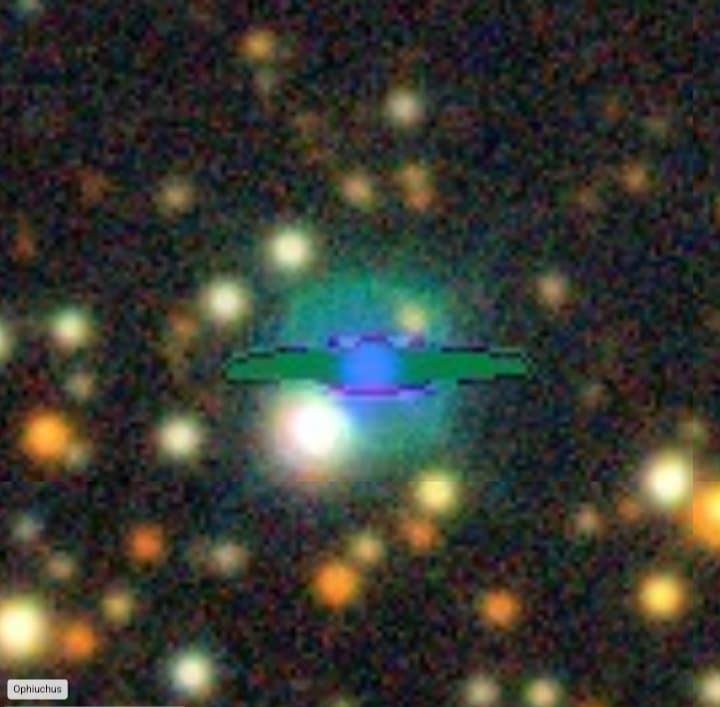
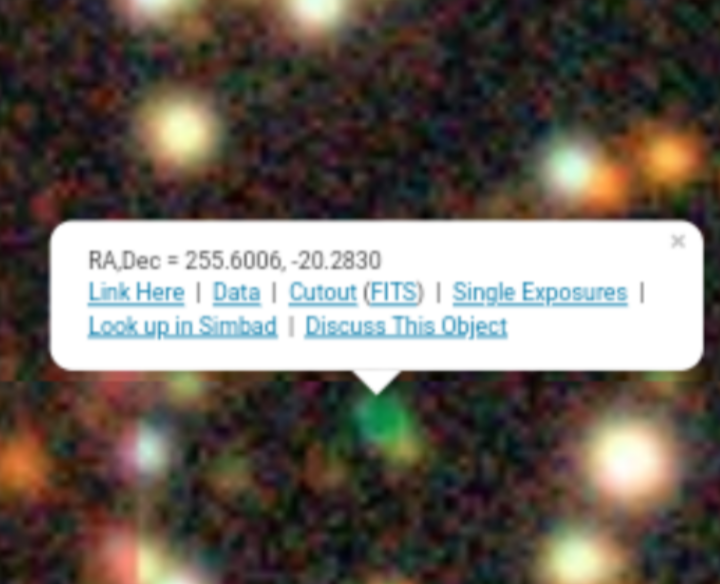
I looked at the single exposures first and thought nobody’s going to believe it. I came to my senses and thought Simbad will know! I saw the RC* object and had to dig a lil online to find it. I believe this a Reverse Nova type star an R Corona Borealis eruptive variable, low in Hydrogen, high in Carbon the extreme fading is because of soot of all things. There are far less known than the number expected to exist 150 out of a hypothesized 1,000 of them in the Milky Way. such a strange and interesting star type and color! it would be amazing to track down a few more of them.
4 Likes
A PN? as I seen similarities between other objects so whatever this is is interesting - good spot
1 Like
Oh wow, that’s cool!!
2 Likes
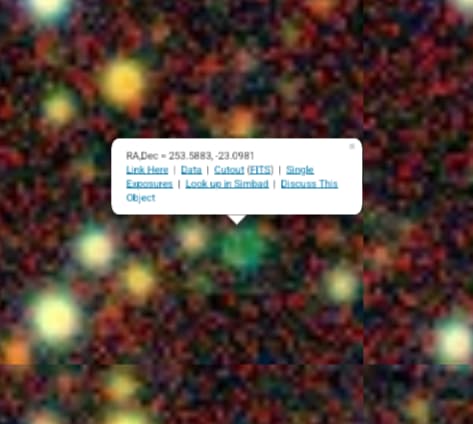
It is cool! I look at it and think; green, carbon rich, soot… can stars be habitable? I’ve posted a few other green spots and noticed that the green is a similar hue to this Carbon rich star and with so many thought missing I wondered if these other green stars could also be variable carbon rich stars. I dont know if or how it could be related but the day this shows brightening in R band is the same day 2014-03-29 that these other green hued stars are also showing in R band. This particular star also shows brightening in I band on 2019-05-14 and I’ll have to take another look to see how the other stars stack up on that day, possibly faintly. It would not surprise me if these supposedly missing stars are in the same area of space. Ive documented more of them than I have posted seperately, but here is another;
1 Like
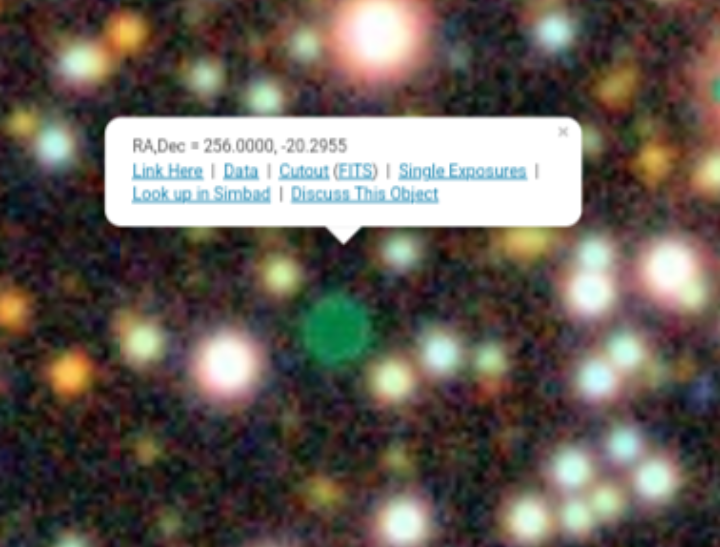
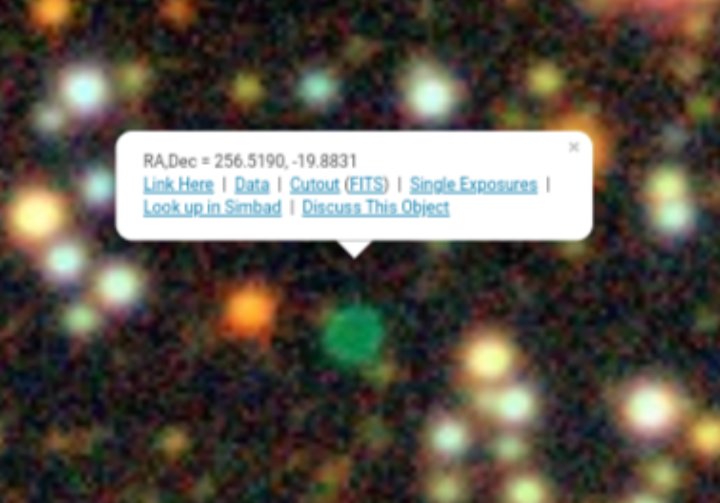
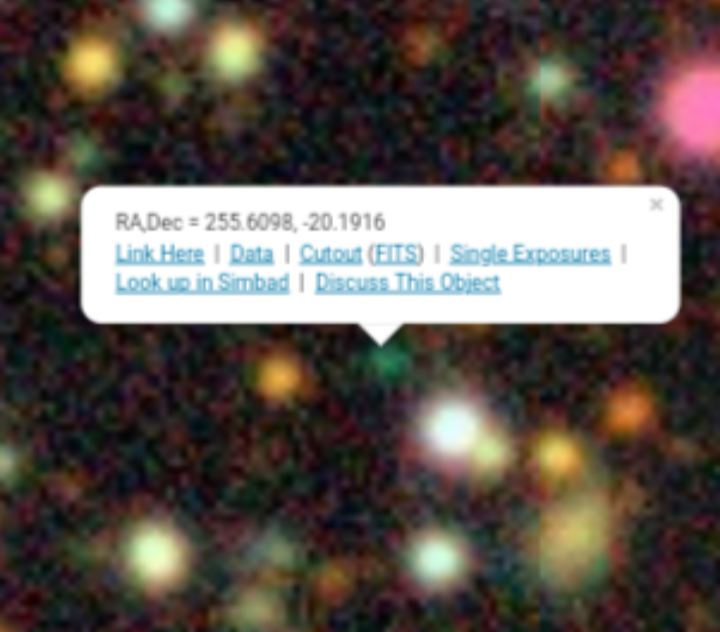
This seems to be an R Coronae variable according to SIMBAD. If you look at the single exposures you can see the brightness of the star as it changes throughout these dates.